Speaker motivation is the deliberate combination of speech choices, session design, and presence that reliably creates audience readiness to act. Event organizers, HR leaders, and L&D teams use it to turn a single session into measurable behavior change. The National Speakers Association frames authenticity as the foundation, and frameworks such as the ARCS model (Attention, Relevance, Confidence, Satisfaction) and Motivating Language Theory give practitioners concrete tools to design and evaluate that impact.
Here is what this guide covers:
- What motivational speakers do and when they are the right choice
- Research-backed techniques that separate high-impact talks from forgettable ones
- Six representative speakers to know, plus a practical hiring checklist with fee guidance
Key Takeaways
The most effective motivational speaker engagements combine curated speaker selection, research-backed delivery techniques, and a clear measurement plan to produce lasting audience behavior change.
| Point | Details |
|---|---|
| Define the audience state first | Write one sentence describing the specific state you want to create before briefing any speaker. |
| Match format to outcome | Short keynotes drive inspiration; workshops and coaching produce behavior change. |
| Use MM/E/DG language balance | Balanced meaning-making, empathetic, and direction-giving language consistently appears in more motivating speech. |
| Vet speakers with references | Always request references from events with a comparable audience size, goal, and industry context. |
| Right Selection for curated booking | Right Selection builds session design into every engagement, matching speaker, format, and measurement plan to your specific goal. |
Table of Contents
- What does a motivational speaker actually do?
- What formats and engagement types should you consider?
- What makes a motivational speech actually work?
- Six motivational speakers worth knowing
- How do you choose and hire the right motivational speaker?
- If you’re the speaker: how do you craft a motivating talk?
- Why curated speaker selection produces better outcomes
- Right Selection connects you with speakers who fit your goals
- Sources
What does a motivational speaker actually do?
A motivational speaker is a professional communicator hired to shift audience mindset, build readiness to act, and create a shared sense of purpose within a defined session. The role is distinct from a trainer or consultant. Where a trainer transfers a specific skill, a motivational speaker changes the emotional and cognitive state that makes skill adoption possible. For a deeper look at that distinction, see motivational speaker vs. trainer.
Common settings include corporate keynotes before a strategy rollout, conference opening or closing sessions, school and university events, non-profit fundraisers, and internal town halls ahead of organizational change. The expected outcomes organizers look for are readiness to act, improved morale, and measurable behavior change in the weeks that follow. A motivational speaker is the right choice when the audience needs a shift in perspective or energy before they can absorb new information. When the goal is skill transfer or process change, a trainer or facilitator is usually the better fit.
Measurement approaches range from post-event pulse surveys and pre/post attitude scales to 30/60/90-day behavioral check-ins that track whether the session’s call to action was followed through.
Pro Tip: Before booking, write one sentence describing the specific audience state you want to create by the end of the session. If you cannot write it, the event goal is not yet clear enough to brief a speaker.
What formats and engagement types should you consider?
The format of a motivational engagement shapes everything: audience size, logistics, customization depth, and the kind of outcome you can realistically expect.
A short keynote (45–90 minutes) is the right choice when the goal is inspiration, shared narrative, or an emotional reset before a larger program. Workshops (half-day to full-day) work when the goal is skills or behavior change, because they allow practice, reflection, and group dialogue. Virtual sessions have expanded access significantly and suit geographically distributed teams, though they require tighter pacing and stronger audience interaction design to hold attention. Breakout sessions (60–90 minutes, smaller groups) are ideal for applying a keynote’s themes to specific team contexts. Coaching engagements, typically multi-session, are the right choice when individual leaders need sustained development beyond a single event.
| Format | Typical audience size | Typical duration | Best use case |
|---|---|---|---|
| Keynote | 50–1000 | 45–90 minutes | Inspiration, shared narrative, event opening/close |
| Workshop | 20–100 | Half-day to full-day | Skill building, behavior change, team alignment |
| Virtual session | Any size | 45–90 minutes | Distributed teams, accessibility, lower cost |
| Breakout session | 10–40 | 60–90 minutes | Applying keynote themes to specific team contexts |
| Coaching engagement | 1–10 | Multi-session over weeks | Sustained individual or leadership development |
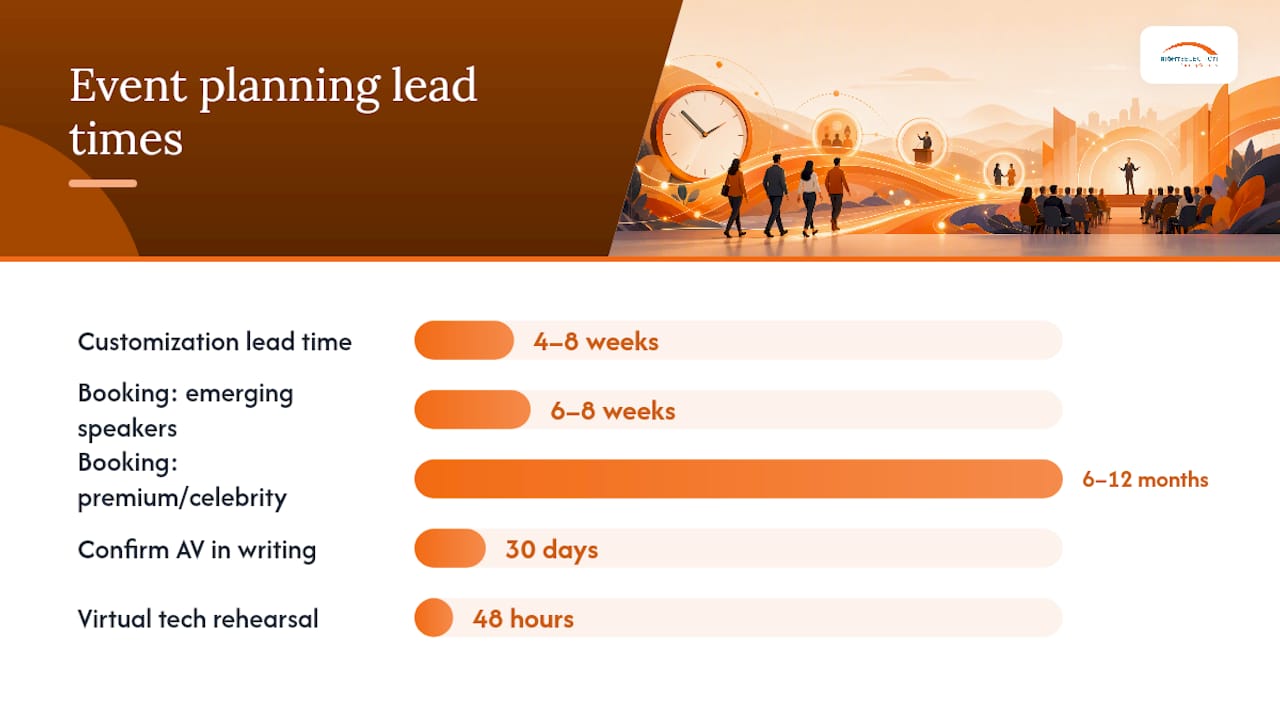
Logistics vary meaningfully by format. A keynote at scale requires a quality PA system, stage lighting, and confidence monitors. Customized content for any format typically needs 4–8 weeks of lead time for research, script development, and rehearsal. Booking lead times in the U.S. market range from 6–8 weeks for emerging speakers to 6–12 months for premium and celebrity-tier speakers. Virtual sessions reduce AV complexity but require a reliable streaming platform, a dedicated moderator, and pre-tested breakout room logistics.
- Confirm AV and stage specs in writing at least 30 days before the event.
- Build customization lead time into your project timeline, not just the booking date.
- For virtual formats, run a full technical rehearsal with the speaker at least 48 hours before the event.
What makes a motivational speech actually work?
The most effective motivational talks combine voice quality, strategic wording, and guided presence to create three audience states: autonomy (the sense that the choice is theirs), competence (the belief they can act), and connection (the feeling of shared purpose). Training Magazine’s research frames motivation as an internal audience state that speakers shape through these three channels, not something delivered at an audience.
The language patterns that matter
A peer-reviewed Frontiers study found preliminary evidence that more motivating speech tends to show a fuller, less breathy voice and a balanced mix of meaning-making (MM), empathetic (E), and direction-giving (DG) language. Meaning-making language explains why something matters. Empathetic language acknowledges the audience’s experience. Direction-giving language tells people specifically what to do next. Talks that lean too heavily on any one type tend to feel either preachy, soft, or bossy. The balance is what creates the sense that the speaker both understands the audience and trusts them to act.
Practical checklist items drawn from this research:
- Tone and pitch: Aim for a full, resonant voice. Breathiness signals uncertainty and reduces perceived authority. Warm-up exercises (lip trills, humming scales) before a session help.
- Pacing: Slow down for key points; speed up slightly during storytelling to build energy. Silence after a key claim is more powerful than rushing to fill it.
- Meaning-making language: Use phrases like “Here’s why this matters for you” before a key point.
- Empathetic language: Acknowledge the audience’s reality before asking them to change it. “I know many of you are navigating…” opens the door.
- Direction-giving language: Close every major section with a specific, concrete next step. Vague calls to action produce vague follow-through.
Dale Carnegie’s guidance adds that storytelling, clear structure, and thorough rehearsal are the core practices that make presentations stick. A story with a named protagonist, a real obstacle, and a specific resolution is far more memorable than a list of principles.
The ARCS model offers a session-design sequence: capture Attention first, establish Relevance to the audience’s specific situation, build Confidence that the change is achievable, and close with Satisfaction through a clear win or commitment. Mixing intrinsic motivators (purpose, growth) with extrinsic ones (recognition, reward) within that sequence tends to produce stronger engagement.
Statistic callout: Studies suggest that a balanced MM/E/DG language mix, combined with fuller vocal quality, is associated with more motivating speech samples.
Pro Tip for organizers: Mic choice and room acoustics shape perceived speaker authority as much as the speaker’s own voice. A quality lapel or handheld mic on a well-tuned PA system is not optional for sessions over 50 people.
Pro Tip for speakers: Record a 10-minute rehearsal and listen back specifically for breathiness and filler words. Most speakers are surprised by how often “um” and “you know” interrupt their direction-giving moments.
Six motivational speakers worth knowing
These six figures represent a range of themes, audiences, and delivery styles. Use them as orientation points when matching a speaker to your event’s goals, not as an exhaustive ranking.
Tony Robbins is among the most recognized names in public speaking motivation. His primary themes are peak performance, personal power, and strategic intervention. He works with large corporate audiences, entrepreneurs, and individuals seeking life change. Audiences typically leave with a heightened sense of urgency and a set of personal commitments. His events range from large-scale conferences to private corporate engagements.
Les Brown specializes in resilience, possibility thinking, and overcoming adversity. His personal story of being labeled “educable mentally retarded” as a child and rising to become a successful broadcaster and speaker is central to his message. He connects strongly with audiences facing organizational change or personal setbacks.
Eric Thomas, known as “ET the Hip Hop Preacher,” brings high-energy delivery and a message built around hunger, discipline, and personal accountability. He resonates particularly with younger professional audiences, athletic teams, and organizations building a performance culture.
Nick Vujicic was born without arms or legs and has built a global speaking career around hope, faith, and the capacity to find purpose in adversity. His talks are especially effective for audiences navigating significant personal or organizational hardship, and for events with a values or culture-building focus.
Dave Ramsey focuses on financial literacy, personal responsibility, and debt-free living. His audience is primarily individuals and organizations seeking financial wellness programs. He is a strong fit for employee benefits events, financial wellness initiatives, and entrepreneurship conferences.
Brené Brown is a research professor whose work on vulnerability, courage, and shame has shaped leadership conversations across industries. Her talks draw on peer-reviewed research and resonate with leadership teams, HR audiences, and organizations working on psychological safety and culture.
To verify fit before booking any speaker, review at least two full-length sample talks, read references from comparable events, and ask for a pre-event call to assess customization willingness.
How do you choose and hire the right motivational speaker?
Start with a decision checklist grounded in four variables: your event goal, your audience’s readiness level, your customization needs, and your measurement plan. A speaker who is extraordinary for a sales kickoff may be the wrong choice for a leadership retreat focused on vulnerability and trust.
Hiring checklist
- Define the single audience state you want to create by the end of the session.
- Confirm the speaker has experience with your audience type (industry, seniority, cultural context).
- Review at least two full-length sample talks, not just highlight reels.
- Ask for references from events with a similar audience size and goal.
- Confirm the speaker’s customization process: do they conduct a pre-event audience audit?
- Clarify what is included in the fee (travel, prep calls, post-event materials).
- Confirm AV and stage requirements in writing.
- Agree on a measurement approach (survey, follow-up session, behavioral metrics).
- Review the contract for cancellation, rescheduling, and exclusivity clauses.
- Confirm booking lead time against your event date.
Questions to ask speakers or bureaus
- What is your process for learning about our audience before the event?
- Can you share two references from events with a similar goal and audience size?
- How do you handle last-minute changes to the event brief?
- What does your customization process look like, and what do you need from us?
- How do you measure whether the session achieved its goal?
- What AV setup do you require, and what happens if it is not available?
- What is your cancellation and rescheduling policy?
- Do you offer post-event follow-up materials or coaching?
For additional guidance on selecting keynote speakers for leadership programs, Right Selection’s resource library covers the full selection process.
Fee tiers and drivers in the U.S. market
Fees vary widely based on speaker profile, customization depth, travel, and event format. Entry-level speakers (emerging professionals, niche experts) typically range from $2,500–$10,000 per engagement. Mid-tier speakers with established track records and published work generally fall in the $10,000–$50,000 range. Premium and celebrity-tier speakers command $50,000 and above, with some top names exceeding $100,000 for a single keynote. These figures are indicative; actual fees depend on customization requirements, travel costs, exclusivity, and multi-day arrangements.
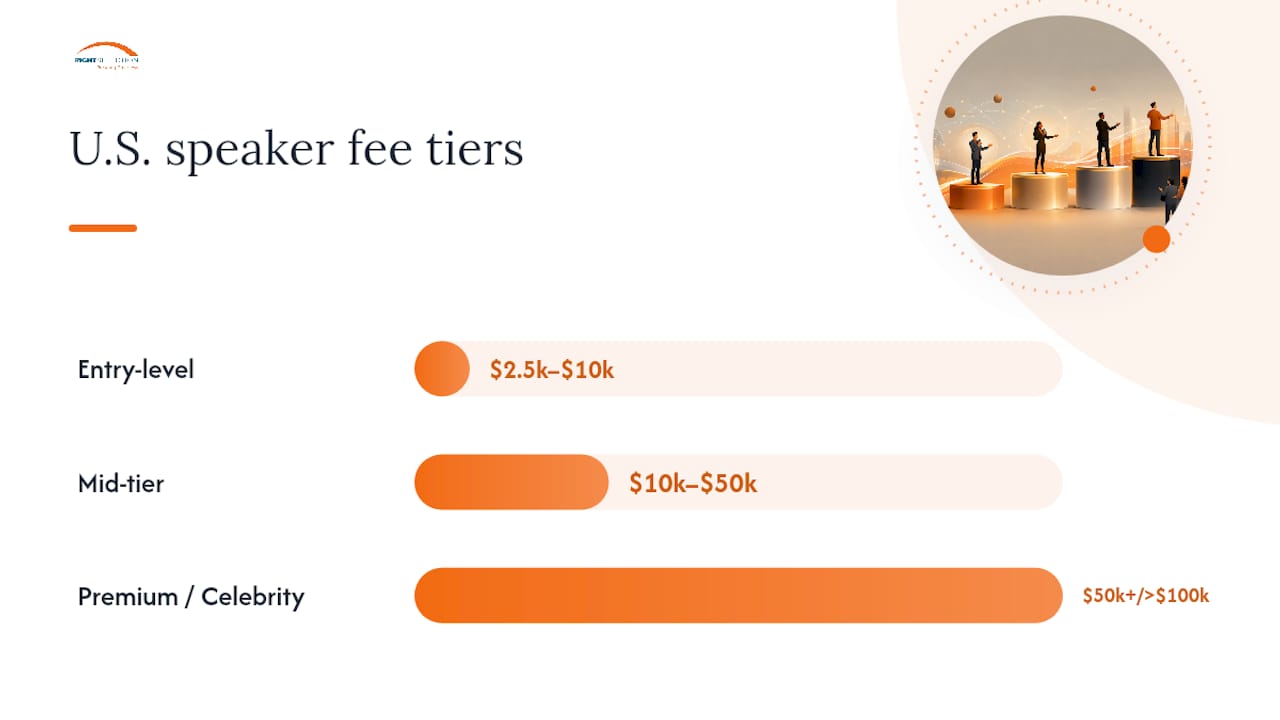
Fee drivers that raise costs: bespoke content development, multi-day workshops, international travel, exclusivity clauses, and post-event coaching add-ons.
Red flags to watch for
- No references from comparable events
- Evasive or vague answers about outcomes and measurement
- No sample material available before booking
- A “one-size-fits-all” talk with no customization process
- Pressure to book without a pre-event discovery call
- Contract language that shifts all cancellation risk to the organizer
Negotiation tip: For mid-tier speakers, bundling a keynote with a workshop or a post-event coaching session often produces a better per-engagement rate than booking each separately.
If you’re the speaker: how do you craft a motivating talk?
A motivating talk starts with one clear question: what do you want your audience to do differently the moment they leave the room? Every preparation decision flows from that answer.
Step-by-step preparation checklist
- Conduct an audience audit. Interview 3–5 audience members before writing a word. Understand their current state, their resistance points, and the specific language they use to describe their challenges.
- Set a single clear objective. One behavioral outcome, stated in one sentence. “Attendees will commit to one specific action before leaving the room” is a clear objective. “Inspire the team” is not.
- Build a narrative arc. Open with a story that mirrors the audience’s current reality. Move through the obstacle, the turning point, and the resolution. Close with a specific, repeatable call to action.
- Gather evidence. Use one or two research findings, a named case study, or a concrete statistic to anchor your key claim. Audiences remember stories, but evidence builds credibility.
- Design the call to action. Make it specific, immediate, and achievable. “Write one name on a card before you leave” beats “think about who you could mentor.”
- Rehearse out loud, not in your head. Full-length rehearsals, recorded, at least three times before the event. The National Speakers Association recommends reconnecting with your personal “Why” during rehearsal to keep delivery authentic rather than performative.
Delivery exercises
- Lip trills and humming: 5 minutes before going on stage to warm up the voice and reduce breathiness.
- Pacing practice: Read your key points aloud at 70% of your natural speed. Most speakers rush when nervous.
- Prosody mapping: Mark your script for emphasis, pause, and pace shifts. Treat it like a musical score.
Two audience engagement prompts that work in both live and virtual settings:
- “Turn to the person next to you and share one word that describes how you feel about [topic] right now.” (Live)
- “Type one word in the chat that describes your biggest challenge with [topic].” (Virtual)
Measuring impact after the talk: send a pulse survey within 24 hours, a follow-up check-in at 30 days asking what action was taken, and a behavioral signal review at 60–90 days. For leaders seeking sustained development beyond a single session, executive coaching best practices offer a structured follow-up framework.
Pro Tip: Dale Carnegie’s guidance is clear: storytelling and rehearsal are not optional polish. They are the core mechanism by which a talk becomes memorable. Allocate at least 40% of your preparation time to rehearsal, not content creation.
Why curated speaker selection produces better outcomes
Generic booking, where an organizer picks a well-known name and hopes the content lands, produces inconsistent results. The gap between a speaker’s public reputation and their fit for a specific audience is where most motivational events underdeliver. Curated selection, by contrast, starts with the audience’s specific state and works backward to the speaker, the format, and the session design.
Two things happen when curation is done well. First, the speaker’s content aligns to the learning objective from the first briefing call, which means the audience hears something that feels written for them rather than adapted from a standard deck. Second, follow-through improves because the session design includes a clear call to action and a measurement plan, not just an inspiring hour. The compound effect of alignment and accountability is what separates a session people remember from one they forget by the following Monday.
The practical next step is not to search for the most famous speaker available. It is to define the audience state you want to create, then find the speaker and format that reliably produce it.
Right Selection connects you with speakers who fit your goals
Right Selection offers curated speaker booking, session design, and outcome measurement for organizations that need more than a name on a stage. With over 30 years of experience and a roster of 100+ global thought leaders, coaches, and trainers, the team matches each engagement to your specific event goal and audience profile.
Services relevant to speaker motivation include custom content development, pre-event audience audits, rehearsal and coaching support, and post-event measurement frameworks. Every engagement is designed to produce a specific, measurable audience outcome, not just a well-received hour.
For organizations comparing booking routes, Right Selection’s approach differs from a standard speaker bureau in one concrete way: session design is built into every engagement, not offered as an add-on. You can view a sample of the curated roster, including profiles like May Sayed Ali, to see how speaker specialties are matched to event goals.
The clearest next step is a complimentary coaching call with the Right Selection team to define your event objective and identify the speaker and format that fit it.
Sources
The sources below represent the research and practitioner guidance this article draws on. Use them to verify methods, explore frameworks in depth, and stay current with industry best practices.
The field of speaker motivation draws from three overlapping areas: academic research on speech acoustics and pragmatics, instructional design frameworks like ARCS, and practitioner guidance from organizations like the National Speakers Association and Dale Carnegie. The sources listed here span all three, giving you a foundation for both evaluating speakers and designing sessions.
- What Is Your Why? – National Speakers Association
- 11 Speaking Techniques that Motivate Others
- How to motivate with speech. Findings from acoustic phonetics and pragmatics
- Es