The fastest path to book a motivational speaker for a corporate event is this: define your desired outcome first, set a firm budget and date, then engage a curated booking service that pre-screens candidates and manages contracting on your behalf. That sequence alone eliminates the two most common planning failures — vague briefs and last-minute scrambles.
Before you open a single directory, spend 30 minutes on this checklist:
- Audience profile: seniority level, industry background, and what they already know about the topic
- Three measurable outcomes: what should attendees think, feel, or do differently after the session?
- Firm date and format: in-person, virtual, or hybrid, and whether the speaker slot is a keynote, breakout, or half-day workshop
- Ballpark budget: including travel, AV, and any session customization fees, not just the speaker’s base fee
Curated booking services handle speaker vetting, reference checks, contract negotiation, and session design coordination. Compared with DIY directory searches, they typically save 10–20 hours of organizer time on a mid-tier booking and reduce the risk of a poor audience fit significantly.
Key Takeaways
Booking the right motivational speaker comes down to clarity of outcome, realistic budgeting, and a structured vetting process — not the size of a speaker’s social following.
| Point | Details |
|---|---|
| Define outcomes first | Write three measurable outcomes before contacting any speaker or service. |
| Match budget to speaker level | U.S. mid-tier professional speakers typically range from $5,000–$15,000 in-person; top-tier names start at $25,000. |
| Book early for top-tier names | Top-tier and celebrity speakers require 6–18+ months of lead time, especially during peak conference seasons. |
| Verify with video and references | Watch at least 20 minutes of full-session footage and call at least two references before signing. |
| Right Selection handles the process | With 30+ years of experience and 100+ speakers, Right Selection curates, vets, and manages the full booking. |
Table of Contents
- Where can you source motivational speakers for a corporate event?
- What types of motivational speakers fit different event goals?
- How much does it cost to book a motivational speaker in the U.S.?
- When should you book? Lead times by speaker level
- How do you choose the right motivational speaker from a shortlist?
- What should your speaker contract cover?
- Why a curated service like Right Selection produces better outcomes
- What most organizers get wrong when booking a speaker
- Right Selection makes the booking process clear and supported
- Sources
Where can you source motivational speakers for a corporate event?
Five main channels exist, and each carries a different trade-off between speed, depth of vetting, and customization support.
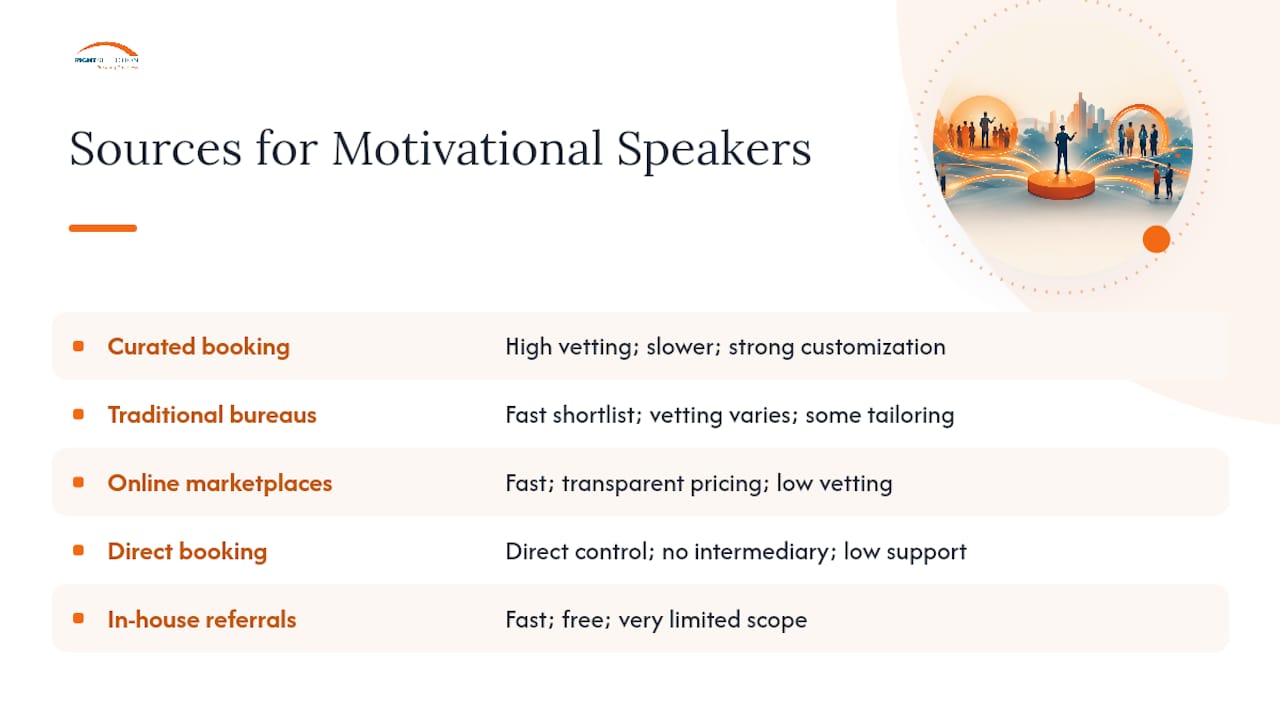
Curated booking services (like Right Selection) pre-screen speakers against your specific goals, handle contracting, and often include session design. They are the highest-touch option and the best fit for high-stakes or complex events.
Traditional speaker bureaus and directories maintain large rosters and can generate a shortlist quickly, but the depth of vetting varies. Many operate on commission from the speaker’s fee, which can create a subtle incentive to recommend higher-fee names.
Online marketplaces (such as GigSalad) offer price transparency and local availability at a glance. They are useful for smaller events or tight budgets, but the organizer carries most of the vetting responsibility. Marketplace platforms typically require more due diligence from the buyer compared with a curated bureau that pre-screens references and session design.
Direct booking via a speaker’s own website works well when you already know exactly who you want. High-profile speakers like Eric Thomas publish availability windows, service options, and biographical proof points directly on their booking pages. The downside: no intermediary to negotiate terms or handle disputes.
In-house networks and referrals are free and fast but limited in scope. They work for internal events where a known quantity is enough.
What types of motivational speakers fit different event goals?
Motivational and inspirational speakers are often grouped together, but there is a practical distinction worth noting: motivational speakers tend to focus on immediate behavior change and action, while inspirational speakers lean toward perspective shifts and aspiration. Most corporate planners need both elements, so the framing below reflects what each type delivers rather than a rigid label.
- Leadership and executive development speakers address decision-making, vision, and organizational culture. Best for leadership kick-offs, senior team retreats, and succession planning events.
- Resilience and comeback speakers (often athletes or individuals who have overcome significant adversity) are powerful for teams navigating change, restructuring, or performance pressure. The emotional credibility is immediate.
- Sales and performance speakers focus on mindset, discipline, and measurable output. They fit sales kick-offs, quarterly business reviews, and high-performance culture initiatives.
- Wellness and mental health speakers address burnout, stress management, and sustainable performance. Demand for this category has grown sharply in post-pandemic corporate programming.
- DEI and belonging speakers help organizations move from policy to culture. They work best when paired with a broader DEI initiative rather than as a standalone event.
- Author-led keynotes bring credibility through published research or frameworks. They tend to resonate with analytically minded audiences who want evidence behind the message.
- Entrepreneur and innovation speakers are well-suited to product launches, strategy off-sites, and culture-shift programs where the organization is asking people to think differently.
A type is not a good fit when the topic conflicts with the audience’s lived experience (e.g., a high-energy sales motivator in front of a burned-out clinical team), when the speaker’s seniority level mismatches the audience’s, or when the content is so general that it could apply to any industry. For leadership-focused events specifically, integrating keynote speakers into a broader leadership program produces stronger outcomes than a standalone talk.
How much does it cost to book a motivational speaker in the U.S.?
Speaker fees in the U.S. span a wide range, and the format (virtual vs. in-person) affects the total cost meaningfully. The table below reflects realistic ballpark ranges for corporate bookings.
Virtual fees are generally lower because travel costs are eliminated, but do not assume a significant discount for top-tier names. Many high-profile speakers price virtual engagements at 70–80% of their in-person fee.
The primary drivers that move a fee up or down:
- Speaker profile and brand recognition: a speaker with a major book, TED Talk, or athletic career commands a premium
- Customization depth: a fully tailored session with pre-event interviews and audience research costs more than a standard keynote
- Travel and lodging: for in-person events, add flights, hotel, and ground transportation, which can add $1,500–$5,000+ for domestic travel
- Single vs. multi-day engagements: a half-day workshop on top of a keynote typically carries an additional fee
- Recording and repurposing rights: licensing a session for internal use or distribution is almost always a separate negotiation
Pro Tip: Budget a contingency of 10–15% above the quoted speaker fee to cover last-minute customization requests, AV upgrades, or travel overruns. Surprises at this stage are common and rarely cheap.
When should you book? Lead times by speaker level
Booking timeline is one of the most underestimated variables in event planning. Getting this wrong means either losing your first-choice speaker or paying a premium for urgency.
- Local and emerging speakers: 4–8 weeks is usually sufficient, though popular local names fill up faster than organizers expect.
- Mid-tier professional speakers: plan for 3–6 months. This window allows time for a proper vetting process, contract negotiation, and session design.
- Top-tier and celebrity speakers: 6–18+ months is the realistic range. Conference season (September through November and January through March) books out earliest.
- Virtual bookings: the technical setup is simpler, but still allow 4–8 weeks minimum for a mid-tier speaker and longer for top-tier names.
Deposit schedules typically run 25–50% on signing, with the balance due 30 days before the event. Cancellation windows and refund terms vary widely, so read those clauses carefully before signing.
Pro Tip: For hybrid or virtual events, lock in a technical rehearsal window at least one week before the event date. Connectivity issues, slide-sharing conflicts, and platform compatibility problems surface in rehearsal, not on the day.
How do you choose the right motivational speaker from a shortlist?
Once you have 3–5 candidates, apply a consistent evaluation framework rather than going with gut instinct. The criteria below are sequenced by the order in which they should eliminate candidates.
- Audience fit: Does the speaker’s background, language, and examples resonate with your specific audience? A speaker who excels with frontline sales teams may not land with a C-suite strategy session.
- Measurable outcome alignment: Can the speaker articulate what the audience will do differently after the session? Vague answers here are a red flag.
- Format experience: Has the speaker delivered in your specific format — large keynote, intimate workshop, virtual panel? Ask for references from comparable events.
- Video proof: Watch at least 20 minutes of recent footage, not a highlight reel. Highlight reels are edited; full-session footage reveals pacing, audience interaction, and how the speaker handles questions.
- Customization willingness: Will they conduct pre-event interviews with your team? Will they reference your company’s specific context, or deliver a canned talk with your logo on slide one?
- References: Request two or three references from events with a similar audience profile. Call them. Ask specifically about audience response and whether the speaker delivered on the agreed brief.
- Budget and contract fit: Is the fee within range, and are the contract terms workable? A speaker who is 20% over budget but checks every other box is worth a conversation; one who is 50% over rarely is.
Sample questions to ask a speaker or their agent:
- “What specific behavior change or outcome have past audiences reported after your session?”
- “How do you customize content for a new client? What does that process look like?”
- “What are your technical requirements for a hybrid event?”
- “Can you share two references from corporate events with a similar audience size and seniority?”
Red flags to watch for:
- No recent full-session video available (only a 90-second sizzle reel)
- Evasive or generic answers about audience outcomes
- Unwillingness to conduct a pre-event briefing call
- References who describe the talk as “great energy” but cannot name a specific outcome
- Rigid insistence on delivering content exactly as written, with no customization
Speaker profiles that include session topics, bio, and session-design notes — like the Mark C. Thompson profile on Right Selection — give you a structured starting point for this evaluation.
What should your speaker contract cover?
A well-drafted contract protects both parties and eliminates the ambiguity that causes disputes. These are the non-negotiable elements to confirm before signing.
| Contract element | What to confirm |
|---|---|
| Deposit schedule | Amount due on signing (typically 25–50%) and balance due date |
| Cancellation policy | Organizer and speaker cancellation terms, refund schedule |
| Force majeure | Coverage for weather, illness, travel disruption, or venue closure |
| Travel and lodging | Who books, who pays, class of travel, hotel standard |
| AV and tech rider | Specific equipment, platform, internet speed, slide format requirements |
| Rehearsal/briefing | Whether a pre-event call or technical rehearsal is included |
| Recording rights | Whether the session can be recorded, and for what internal or external use |
| Insurance | Whether the speaker carries professional liability coverage |
On negotiation: travel concessions (economy vs. business class for shorter domestic flights) and minor schedule adjustments are usually negotiable. Content ownership and recording rights are not standard giveaways — expect to pay a licensing fee if you want to distribute the session internally.
For virtual and hybrid events, the AV rider deserves extra attention. Confirm the speaker’s preferred platform (Zoom, Teams, Hopin), minimum upload speed, backup connectivity plan, and whether they need a dedicated technical producer on their end. Collect a single operational contact from the speaker’s team before event week.
Why a curated service like Right Selection produces better outcomes
The difference between a good speaker and the right speaker for your event comes down to how well the selection process is structured. Right Selection specializes in connecting organizations with an elite network of global thought leaders, speakers, coaches, and corporate trainers, with an emphasis on tailored curation and session design rather than simply filling a slot on a roster.
The process works in clear stages:
- Discovery: a structured conversation to define event goals, audience profile, format, and budget
- Curated shortlist: candidates selected against your specific brief, not a generic popularity ranking
- Speaker brief and vetting: pre-screening of references, video review, and session-design alignment
- Negotiation and contract: fee negotiation and contract management handled on your behalf
- Session design and rehearsal: content alignment with your business context, pre-event briefing, and technical rehearsal coordination
- Delivery and measurement: post-event follow-up to assess whether the session achieved its stated outcomes
With over 30 years of experience and a roster of 100+ speakers spanning leadership, resilience, DEI, sales performance, wellness, and more, Right Selection brings depth of discernment that a directory search cannot replicate. Profiles like May Sayed Ali illustrate the roster’s topic diversity and the level of session detail available to organizers before a commitment is made.
Curated services that include session design and rehearsal tend to produce stronger, more measurable event outcomes because the content is aligned to business goals rather than delivered as an off-the-shelf talk.
What most organizers get wrong when booking a speaker
The pattern I see most consistently is this: organizers invest significant time choosing a speaker and almost no time defining what success looks like. A compelling bio and a strong video reel are necessary but not sufficient. The session brief — the document that tells the speaker exactly who is in the room, what they already believe, and what you need them to think or do differently — is where most bookings either succeed or fall short.
A few other recurring mistakes worth naming directly:
- Under-budgeting for customization: the base fee covers the talk. Pre-event research, audience interviews, and bespoke content are often additional. Ask upfront.
- Skipping the AV rehearsal: for virtual and hybrid events especially, a missed rehearsal is a gamble that rarely pays off. Technical failures in the first five minutes of a keynote are almost impossible to recover from.
- Treating references as a formality: most organizers ask for references and never call them. The ones who do call consistently report that the reference conversation changed their decision, in either direction.
One thing less-experienced planners often overlook: ask the speaker how they handle a room that is not responding. The answer tells you more about their craft than any highlight reel.
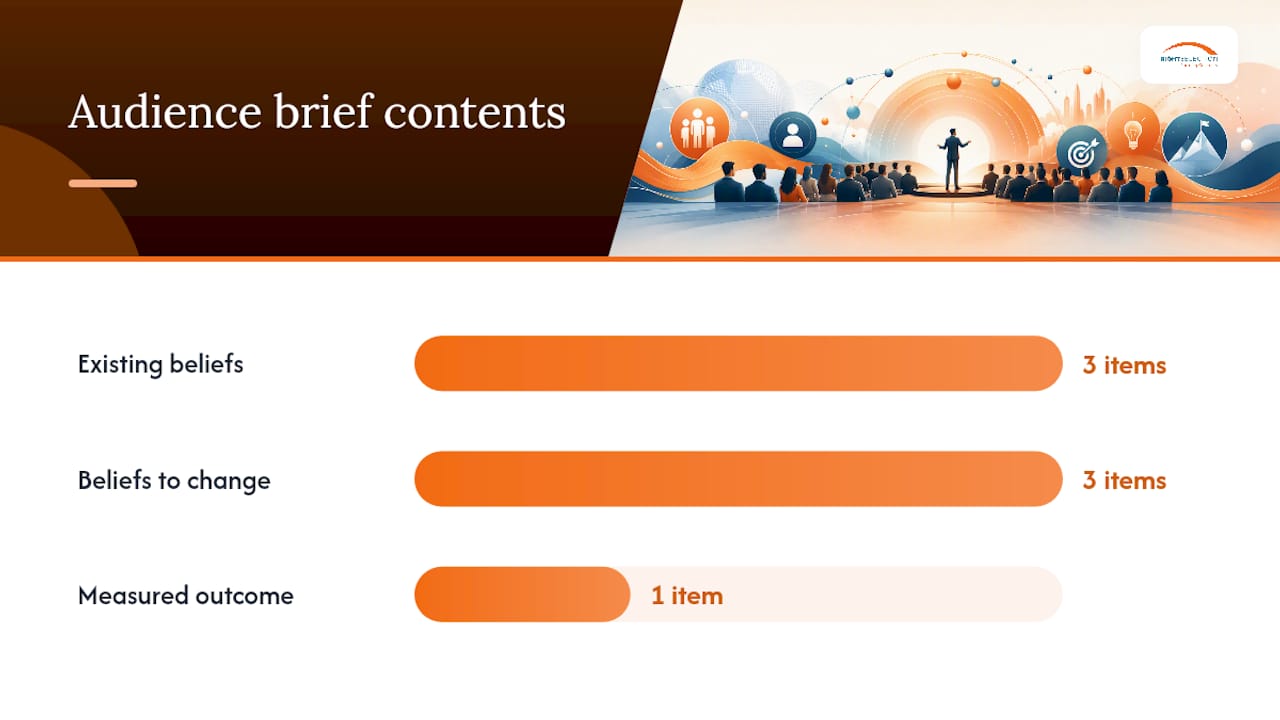
Pro Tip: Send the speaker a one-page audience brief at least two weeks before the event. Include three things the audience already believes about the topic, three things you want them to believe differently, and one outcome you will measure. Speakers who engage seriously with that brief deliver measurably better sessions.
Right Selection makes the booking process clear and supported
Finding the right speaker for a high-stakes corporate event should not feel like a research project. Right Selection removes that friction by handling the full process — from curating a shortlist matched to your goals to managing contracts and coordinating session design.
To get started, reach out to Right Selection for a complimentary discovery call. Before that call, have your event date, audience profile, and three desired outcomes ready. Right Selection will curate a shortlist of vetted candidates, schedule speaker calls on your behalf, handle fee negotiation and contracting, and coordinate the pre-event session design process. Pricing transparency and contract support are built into the engagement from the first conversation, so there are no surprises at signing.
Sources
- Book Eric Thomas | World’s #1 Motivational Speaker