

Executive presence is a trainable leadership competency combining gravitas, communication, composure, and character. It is not a personality trait you either have or lack. The most effective method to develop it is structured coaching grounded in diagnostic assessment. When you build executive presence through coaching, you follow a deliberate process of identifying specific behavioral gaps, practicing targeted shifts in real work situations, and measuring progress over time. Industry standards recommend structured programs of 3–4 months to produce the fastest and most lasting results.
What are the core components of executive presence that coaching targets?
Executive presence, as defined by leadership expert John Mattone, rests on four pillars: character, gravitas, communication, and appearance. Character is the foundational bedrock. It means your values and self-concept align with how you show up in every room and every conversation.
Each pillar requires a different coaching focus:
- Gravitas is the authority and poise you project under pressure. It shows up when you hold a position calmly in a board meeting or pause before responding to a challenge.
- Communication covers clarity, conciseness, and influence in both spoken and written form. Leaders with strong communication presence make complex ideas land simply.
- Composure is emotional regulation and strategic restraint under stress. It is the ability to stay measured when a project derails or a stakeholder pushes back hard.
- Character means your authentic values drive your outward behavior consistently. When your internal self-concept matches what others observe, trust builds naturally.
Presence coaching differs from etiquette training or presentation skills workshops in one critical way. It targets the specific signals you send in real leadership moments, not abstract rules of conduct. Effective coaching makes presence concrete by focusing on measurable behaviors observable in meetings, decisions, and high-stakes interactions.
Pro Tip: When assessing your own presence, ask a trusted colleague to describe how you show up in your three most common leadership situations. Their answer will reveal more than any self-assessment.

How does diagnostic assessment inform personalized executive presence coaching?
Coaching without assessment is prescription before diagnosis. Diagnostic-led coaching produces longer-lasting presence improvements than tip-based workshops precisely because it starts with measurement, not assumptions.
A standard executive presence assessment typically includes three components:
- 360-degree feedback: Colleagues, direct reports, and senior leaders rate your presence behaviors across specific situations. This reveals perception gaps you cannot see from the inside.
- Video review: Recorded meetings or presentations expose nonverbal patterns, pacing issues, and composure signals that self-reporting misses entirely.
- Personality and behavioral profiles: Tools like structured behavioral assessments identify default patterns under pressure and map them against target leadership behaviors.
The 90-minute debrief session that follows 360-degree feedback is where the real work begins. A skilled coach uses that session to establish your leadership baseline, name the specific gaps between how you see yourself and how others experience you, and set concrete, measurable goals for the engagement.
| Assessment tool | What it measures | Key output |
|---|---|---|
| 360-degree feedback | Peer and stakeholder perception | Presence gap analysis |
| Video review | Nonverbal and vocal patterns | Specific behavioral targets |
| Behavioral profile | Default responses under pressure | Coaching priority ranking |
| Debrief session | Self-concept vs. perception alignment | Personalized development plan |
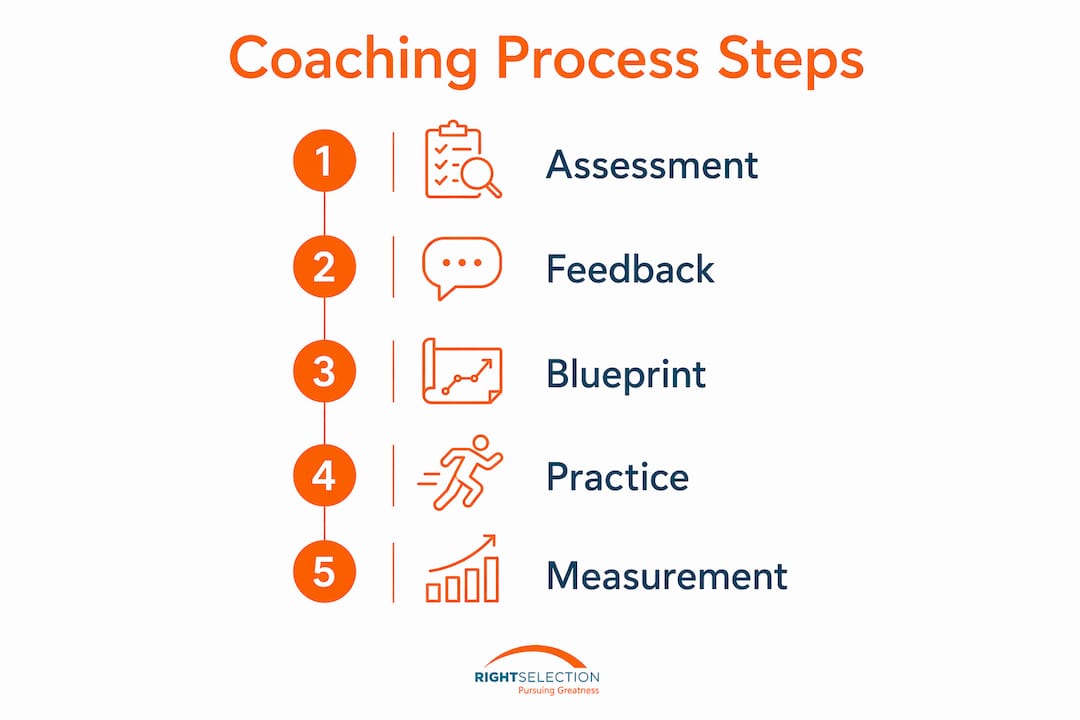
The output of this phase is not a generic list of tips. It is a presence blueprint built around your specific leadership context, your role, your stakeholders, and the moments that matter most to your career.
What are the essential steps in a coaching engagement to build executive presence?
The most effective coaching engagements focus on 2–3 behavioral shifts rather than attempting a broad personality overhaul. That surgical focus allows measurable progress and faster confidence building. Trying to change everything at once produces neither.
A well-structured engagement follows this sequence:
- Complete the diagnostic phase. Use 360-degree feedback, video review, and a behavioral profile to establish your baseline. Set 2–3 specific behavioral targets based on the debrief findings.
- Identify your high-stakes scenarios. Most leaders see meaningful improvements when coaching targets real leadership moments like board meetings, strategic discussions, and investor calls. Name the three situations where your presence matters most.
- Practice in live work situations. Between sessions, apply your target behaviors in actual meetings and conversations. Structured rehearsal before a high-stakes event and reflection immediately after it accelerates learning faster than role-play alone.
- Use incremental feedback loops. Each coaching session reviews what happened since the last one, identifies what worked, and refines the approach. Progress compounds across sessions.
- Track four categories of change. Behavioral, perception, business, and personal indicators all matter. Clarity of communication, how stakeholders describe you, business alignment, and your own self-confidence each signal different dimensions of growth.
- Complete the engagement with a presence audit. At the end of a 3–4 month program, repeat key elements of the original assessment to measure how perception and behavior have shifted.
Two specific techniques accelerate progress faster than most leaders expect. Strategic silence, the deliberate pause before responding in a high-pressure moment, signals composure and authority simultaneously. Decision narration, explaining your reasoning briefly as you make a call, builds credibility and shows others how you think. Managing nerves and practicing strategic silence often improves faster than formal presentation skills and carries greater presence impact.
Pro Tip: Before your next high-stakes meeting, write down the one behavioral target you are practicing. Review it immediately after the meeting and note one specific moment where you applied it and one where you did not.
How can leaders maintain and elevate executive presence after coaching?
Most leaders report meaningful, observable shifts in executive presence within 3–6 months of structured coaching. The risk after that window is regression. Without deliberate maintenance, old patterns return under pressure.
Sustaining presence requires consistent effort across four areas:
- Ongoing self-reflection. Review your core values and leadership character quarterly. Ask whether your recent behavior in high-pressure moments aligned with the leader you intend to be.
- Regular peer and mentor feedback. Schedule brief feedback conversations every 60–90 days with two or three trusted colleagues. Ask them one specific question about a recent situation rather than requesting general impressions.
- Stretch opportunities. Seek contexts where you practice presence in new settings: cross-functional leadership, external speaking, or leading through unfamiliar challenges. New situations prevent presence from becoming a performance only in familiar rooms.
- Avoiding the performance facade. Overcompensating for a perceived weakness, projecting authority you do not feel, or mimicking another leader’s style all undermine authenticity. Presence built on character must stay consistent, not situational.
“Executive presence is not about becoming someone different. It is about removing the patterns that obscure the leader’s authentic self. The work is subtraction as much as addition.”
Belinda Block, Executive Presence Coaching for Senior Leaders
Tracking your investment matters too. Coaching ROI shows up in measurable ways: stakeholder trust, promotion readiness, team engagement, and the quality of decisions made under pressure. Measurable progress in gravitas, clarity, and stakeholder trust typically becomes evident within six months of committed coaching. That timeline gives you a concrete benchmark to hold yourself accountable.
For leaders who want to connect presence development to broader career growth, career advancement coaching techniques offer a practical framework for sustaining momentum beyond the initial engagement.
Key Takeaways
Coaching builds executive presence through diagnostic assessment, targeted behavioral practice, and consistent measurement across a 3–6 month engagement.
| Point | Details |
|---|---|
| Presence is trainable | Executive presence develops through deliberate coaching, not innate personality. |
| Diagnosis before coaching | 360-degree feedback and video review establish a baseline before any intervention. |
| Focus on 2–3 behaviors | Targeting a small number of specific shifts produces faster, measurable progress. |
| Practice in real scenarios | High-stakes meetings and live work situations accelerate presence growth. |
| Sustain through feedback | Regular peer feedback and stretch opportunities prevent regression after coaching ends. |
Why diagnostic-led coaching is the only path I recommend
I have seen leaders invest in presence workshops, read every book on executive communication, and still walk into a board meeting and lose the room in the first two minutes. The reason is almost always the same. They were working on the wrong thing.
The most common misconception I encounter is that executive presence is about image. Leaders focus on wardrobe, posture, or vocal tone as if presence were a costume. Those elements matter at the margins. What actually moves the needle is character alignment and composure under pressure. When your values are clear and your nervous system is regulated, presence follows naturally.
The second misconception is that coaching is about becoming more polished. The leaders I have seen make the fastest gains are not the ones who became more performative. They are the ones who removed the habits that were obscuring who they already were. A well-designed executive coaching program does not add a layer of sophistication. It strips away the noise.
What I find most compelling about diagnostic-led coaching is the specificity it creates. When a leader knows that their presence gap shows up specifically in the first 90 seconds of a high-stakes conversation, they have something concrete to practice. Generic advice about “being more confident” produces nothing. A specific behavioral target practiced in a real meeting produces change you can measure within weeks.
Commit to the process. The compound effect of small, consistent behavioral shifts over 3–4 months is far more powerful than any single breakthrough moment.
— Dipti
How Right Selection connects leaders to executive presence coaching
Right Selection has spent over 30 years curating an elite network of coaches, thought leaders, and corporate trainers who specialize in measurable leadership development.
For corporate professionals ready to develop executive image and strengthen their leadership presence, Right Selection matches you with coaches who use diagnostic assessments, personalized presence blueprints, and real-scenario practice. Every engagement is designed around your specific leadership context and business goals, not a generic curriculum. Coaches like Mark C. Thompson bring deep expertise in presence and leadership communication to each engagement. The starting point is a complimentary coaching call to explore your goals and identify the right coach for your situation.
FAQ
What is executive presence, exactly?
Executive presence is a set of trainable leadership capacities combining gravitas, communication, composure, and character. It is not a fixed personality trait but a measurable set of behaviors that develop through intentional coaching.
How long does it take to build executive presence through coaching?
Structured coaching engagements typically run 3–4 months. Most leaders report observable presence improvements within 3–6 months of committed, diagnostic-led work.
What is 360-degree feedback in executive presence coaching?
360-degree feedback collects presence ratings from colleagues, direct reports, and senior leaders across specific situations. It reveals the gap between how a leader sees themselves and how others actually experience them.
How do I know if my coaching is working?
Progress shows up across four indicator categories: behavioral changes, shifts in how stakeholders describe you, business alignment, and growth in personal self-confidence. Tracking all four gives a complete picture of coaching effectiveness.
Is executive presence coaching different from presentation skills training?
Yes. Presence coaching targets specific behaviors in real leadership moments like board meetings and strategic discussions. Presentation skills training focuses on delivery mechanics, which addresses only one narrow dimension of presence.