

Personal growth tracking in executive coaching is defined as the systematic measurement of observable behavioral changes using multi-source data, structured feedback, and defined success criteria. The standard industry term for this practice is behavioral impact measurement, and it sits at the core of every credible executive coaching engagement. To effectively track personal growth through executive coaching, you need more than a journal and good intentions. You need measurable goals, 360-degree feedback, and a repeatable review cycle that converts subjective progress into objective evidence. This article gives you the exact frameworks to do that.
What measurable goals should you track in executive coaching?
Executive coaching shows strongest effectiveness on goal setting, self-regulation, and behavioral cognitive activities. That finding matters because it tells you where to focus your energy. Attitudes and personality traits are hard to measure and slow to change. Specific behaviors are neither.

The most defensible approach is to treat development goals as hypotheses tested with defined observable behaviors and stakeholder feedback. A hypothesis goal sounds like this: “If I practice structured listening in one-on-one meetings, my direct reports will report feeling more heard within 90 days.” That framing forces you to specify the behavior, the audience, and the timeline.
Set 2–4 behavioral goals per coaching engagement. More than four dilutes focus. Fewer than two limits the data you can collect. Each goal should describe a behavior that a colleague could observe and confirm, not an internal state only you can access.
Relevant leadership behaviors worth tracking include:
- Decision-making speed: How quickly you move from data gathering to a clear decision in team meetings
- Upward communication: How often you proactively brief your manager on project risks before they escalate
- Delegation quality: Whether direct reports receive clear scope, authority, and deadlines when assigned work
- Conflict resolution: How you respond when two team members disagree in a group setting
- Executive presence: Whether your communication in senior forums is concise and confident
Pro Tip: Phrase every goal with a verb that a third party can observe. “Improve communication” is unmeasurable. “Deliver a structured three-point summary at the start of every executive briefing” is not.
How does 360-degree feedback help you monitor progress?
360-degree feedback is a structured process where peers, direct reports, and managers each rate your behavior against defined competencies. It is the most credible tool for evaluating coaching impact beyond self-report alone. The reason is straightforward: self-reported outcomes tend to be larger than those observed by others, which means relying on your own assessment risks overestimating your growth.
A credible 360-degree measurement cycle follows three stages:
- Pre-coaching baseline: Collect ratings from 6–10 stakeholders before the first coaching session. This establishes the starting point against which all future change is measured.
- Mid-coaching pulse check: Run a shorter, targeted survey at the midpoint of the engagement. Focus only on the 2–4 behavioral goals you set. This gives you course-correction data while the coaching is still active.
- Post-coaching evaluation: Repeat the full assessment after the final session. Compare scores against the baseline. Look for shifts in stakeholder ratings, not just your own perception.
Integrating stakeholder feedback with self-assessments requires discipline. Rate yourself on the same competencies your stakeholders rate. Then compare the gap. A shrinking gap between your self-rating and stakeholder ratings is itself a measure of growth. It signals that your self-awareness is aligning with how others actually experience you.
“Evaluations should measure goal attainment and behavior change, not solely satisfaction or feelings.” This principle, drawn from research-based impact measurement, is the standard that separates credible coaching programs from those that simply feel good.
Stakeholder fatigue is a real risk. Keep mid-cycle surveys under 10 questions. Explain to raters why their input matters and how it will be used. Raters who understand the purpose respond with more care and honesty.
What tools and systems work best for tracking personal development?
Effective tracking systems balance simplicity and usability. The best system is the one you will actually use every week, not the most sophisticated one available. For corporate professionals, four formats consistently work:
| Tool | Best for | Limitation |
|---|---|---|
| Bullet journal | Daily behavioral logging, reflection | Manual, not easy to aggregate data |
| Spreadsheet (Excel, Google Sheets) | Quantitative goal tracking, trend analysis | Requires setup discipline |
| Habit tracking app (e.g., Streaks, Habitica) | Consistency monitoring, streak visibility | Limited qualitative capture |
| Coaching dashboard (custom or coach-built) | Centralized view of goals, feedback, and progress | Depends on coach’s tools |
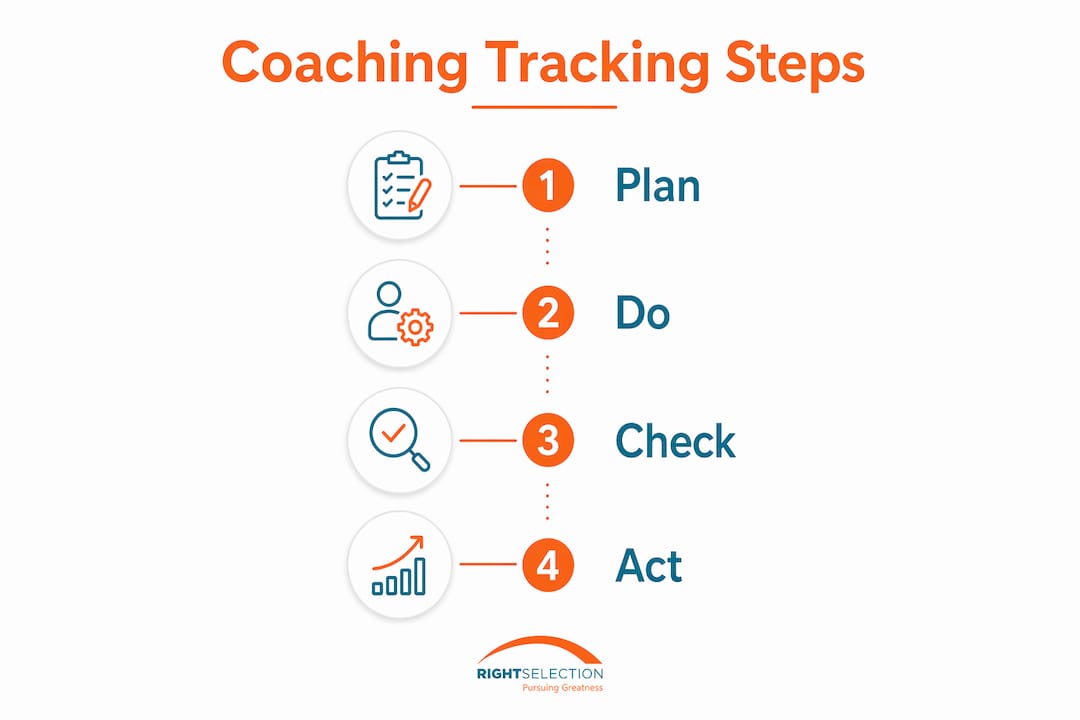
Daily logging combined with weekly and monthly review rituals creates a cycle that turns subjective progress into objective data. The PDCA cycle (Plan, Do, Check, Act) maps directly onto this rhythm. You plan your behavioral goal, execute it during the week, check your log and stakeholder signals, then adjust your approach for the next cycle.
Data-driven personal development frameworks borrowed from analytical fields apply KPIs like win rate and consistency rate to personal habits. A “win rate” for a communication goal might be the percentage of meetings where you delivered a structured opening. That number is concrete, trackable, and comparable week over week.
Pro Tip: Block 15 minutes every Friday to update your tracking log. Treat it as a non-negotiable calendar item, the same way you would a client call. Consistency in logging is what separates executives who grow from those who only intend to.
Step-by-step process to track and optimize your coaching engagement
A structured tracking process removes the guesswork from measuring coaching success. The six phases below apply to any executive coaching engagement, regardless of duration or format.
- Baseline audit: Before your first session, document your current behavioral patterns. Collect 360-degree feedback. Identify the 2–4 behaviors you want to change. This is your starting point.
- Goal setting: Write each goal as a testable hypothesis with a named behavior, a named audience, and a 60–90 day timeline. Share these goals with your coach and at least one trusted stakeholder.
- Implementation: Execute between-session assignments. Require between-session assignments and log each attempt in your tracking system. Note what worked, what did not, and what you will adjust.
- Measurement: At weeks 4 and 8, review your log data. Ask one or two stakeholders for informal observations. Compare their input to your self-assessment.
- Review: At the midpoint of the engagement, run a formal pulse check. Bring the data to your coaching session. Discuss what the numbers show, not just how you feel.
- Optimization: Adjust goals that show limited movement. A goal with no measurable progress after 60 days is either poorly defined or the wrong priority. Recalibrate with your coach.
The most common pitfall is tracking only participation or vague reflections rather than observable behavior shifts. Logging “attended coaching session” is not evidence of growth. Logging “used structured listening in three of four one-on-ones this week, received positive comment from direct report” is.
Pro Tip: At the start of each coaching session, spend the first five minutes reviewing your tracking log with your coach. This habit keeps the conversation grounded in evidence rather than anecdote.
How do you troubleshoot common tracking challenges?
Even well-designed tracking systems run into obstacles. Recognizing these problems early prevents them from derailing your progress.
- Inconsistent data collection: Skipping log entries for two or three weeks creates gaps that distort your trend data. Set a minimum viable logging standard: one entry per week, even if brief. Partial data is better than none.
- Biased feedback: Stakeholders who are close allies may rate you generously. Stakeholders who are in conflict with you may rate you harshly. Include a mix of raters across reporting levels and relationship types to balance this effect.
- Stakeholder disengagement: Raters stop responding when surveys feel burdensome or purposeless. Keep surveys short, communicate results back to raters where appropriate, and thank them specifically for their input.
- Overreliance on self-assessment: Your internal sense of progress is a useful signal, but not a sufficient one. Coaching is more effective when it aligns with organizational talent strategies and measures impact beyond individual satisfaction.
- Goal drift: As the coaching engagement progresses, it is tempting to add new goals or shift focus. Protect your original 2–4 behavioral goals unless your mid-cycle data gives a clear reason to change them.
When measurements show limited progress, the first question to ask is whether the goal was observable enough. Vague goals produce vague data. Rewrite the goal with a more specific behavior and a shorter measurement window, then restart the cycle.
Key Takeaways
Credible personal growth tracking in executive coaching requires observable behavioral goals, multi-source feedback, and a structured review cycle rather than self-assessment alone.
| Point | Details |
|---|---|
| Set behavioral goals as hypotheses | Define 2–4 observable behaviors with named audiences and 60–90 day timelines. |
| Use 360-degree feedback at three points | Collect baseline, mid-cycle, and post-coaching stakeholder ratings to measure real change. |
| Choose a tracking system you will use | Spreadsheets, habit apps, or journals all work; consistency matters more than sophistication. |
| Apply the PDCA cycle weekly | Plan, execute, check your log, and adjust each week to build a compound effect over time. |
| Measure behavior change, not participation | Log specific behavioral attempts and stakeholder observations, not session attendance. |
Why I think most executives are measuring the wrong thing
After working with corporate professionals across dozens of coaching engagements, I have noticed a consistent pattern. Executives invest real time and money in coaching, then measure success by how motivated they feel at the end of a session. That is the wrong metric. Motivation fades. Behavior either changes or it does not.
The most credible coaching outcomes I have seen come from professionals who treat their development goals the way a scientist treats a hypothesis. They define the behavior, collect the baseline, run the experiment, and check the data. They do not wait until the final session to ask whether anything changed. They know by week six because they have been tracking it.
The uncomfortable truth about self-assessment is that we are all subject to confirmation bias. We remember the meetings where we communicated well and forget the ones where we reverted to old patterns. External feedback from peers and direct reports corrects for that bias. It is not comfortable, but it is accurate.
My strongest advice to any corporate professional entering a coaching engagement: define success before the first session, not after the last one. Agree on the behavioral indicators with your coach and at least one stakeholder. Then track those indicators every week. The compound effect of consistent, evidence-based review is what separates executives who grow from those who simply go through the motions.
— Dipti
Right Selection’s approach to measurable leadership development
Right Selection connects corporate professionals with an elite network of coaches, thought leaders, and corporate trainers who specialize in measurable leadership outcomes. With over 30 years of experience and a roster of 100+ speakers and coaches, Right Selection designs programs where success criteria are defined before the engagement begins, not after.

Every coaching program Right Selection curates is built around observable behavioral goals, multi-source feedback, and structured review cycles. Professionals working with coaches like Mark C. Thompson and Liz Wiseman benefit from frameworks that align personal growth with organizational talent strategy. If you are ready to move from anecdotal progress to evidence-based leadership development, explore Right Selection’s coaching programs and find the right fit for your goals.
FAQ
What is behavioral impact measurement in executive coaching?
Behavioral impact measurement is the process of tracking observable changes in leadership behavior using multi-source feedback, defined success criteria, and structured review cycles. It is the standard method for evaluating whether executive coaching is producing real growth.
How many goals should I set for an executive coaching engagement?
Set 2–4 measurable behavioral goals per engagement. Each goal should describe an observable action that a colleague can confirm, tied to a specific audience and a 60–90 day timeline.
Why is 360-degree feedback better than self-assessment alone?
Self-reported outcomes tend to be larger than those observed by others, which means self-assessment alone risks overestimating your growth. Multi-source feedback from peers, managers, and direct reports provides a more accurate and credible picture.
What is the PDCA cycle and how does it apply to personal growth tracking?
PDCA stands for Plan, Do, Check, Act. Applied to personal development, it means setting a behavioral goal, practicing it during the week, reviewing your log and stakeholder signals, and adjusting your approach for the next cycle.
How do I know if my executive coaching is working?
Compare your post-coaching 360-degree feedback scores against your pre-coaching baseline. If stakeholder ratings on your target behaviors have shifted upward and the gap between your self-rating and stakeholder ratings has narrowed, your coaching is producing measurable results.