
Behavioral coaching is defined as a structured, one-on-one leadership development process that helps executives modify specific thinking patterns and behaviors to improve leadership outcomes. Understanding what behavioral coaching means for executives goes beyond a simple definition. It describes a focused engagement where a trained coach works with a senior leader to surface blind spots, shift limiting behaviors, and build the internal capacity to lead more effectively. This is not therapy, mentoring, or consulting. It is a disciplined process aimed squarely at present and future performance, with measurable results that ripple across teams and organizational culture.
What does behavioral coaching mean for executives?
Behavioral coaching for executives is a present and future focused developmental process. It targets how a leader thinks, decides, and acts, not their technical knowledge or functional expertise. The goal is to modify specific behaviors that either limit or accelerate leadership effectiveness.
This definition matters because executives often confuse behavioral coaching with other forms of support. Coaching does not explore past psychological trauma as therapy does. It does not offer advice based on personal experience as mentoring does. It does not deliver solutions as consulting does. Each of those approaches has real value, but behavioral coaching occupies a distinct space: it builds the leader’s own judgment and problem-solving capacity through guided self-reflection.
The organizational impact is significant. Coaching delivers measurable improvements in communication, decision-making, and team alignment. Those improvements do not stay contained to the individual. They cascade through the teams that leader manages, shaping culture from the top down.

How does behavioral coaching work for senior executives?
The structure of a behavioral coaching engagement follows a consistent pattern. Engagements typically span 6–12 months, with sessions scheduled every 2–3 weeks and lasting 60–90 minutes each. That cadence is deliberate. Behavioral change requires time, repetition, and real-world application between sessions.
The process begins with diagnostics. Coaches use tools like 360-degree feedback, behavioral assessments, and stakeholder interviews to establish a clear baseline. These diagnostics surface the specific behaviors that are limiting the executive’s effectiveness. Without this foundation, coaching risks becoming a series of interesting conversations with no clear direction.
Sessions themselves follow a non-directive model. The coach does not tell the executive what to do. Instead, the coach asks questions that prompt the leader to examine their own assumptions, reactions, and patterns. This approach feels uncomfortable at first, especially for executives accustomed to being the person with answers. That discomfort is not a flaw in the process. It is the process working.
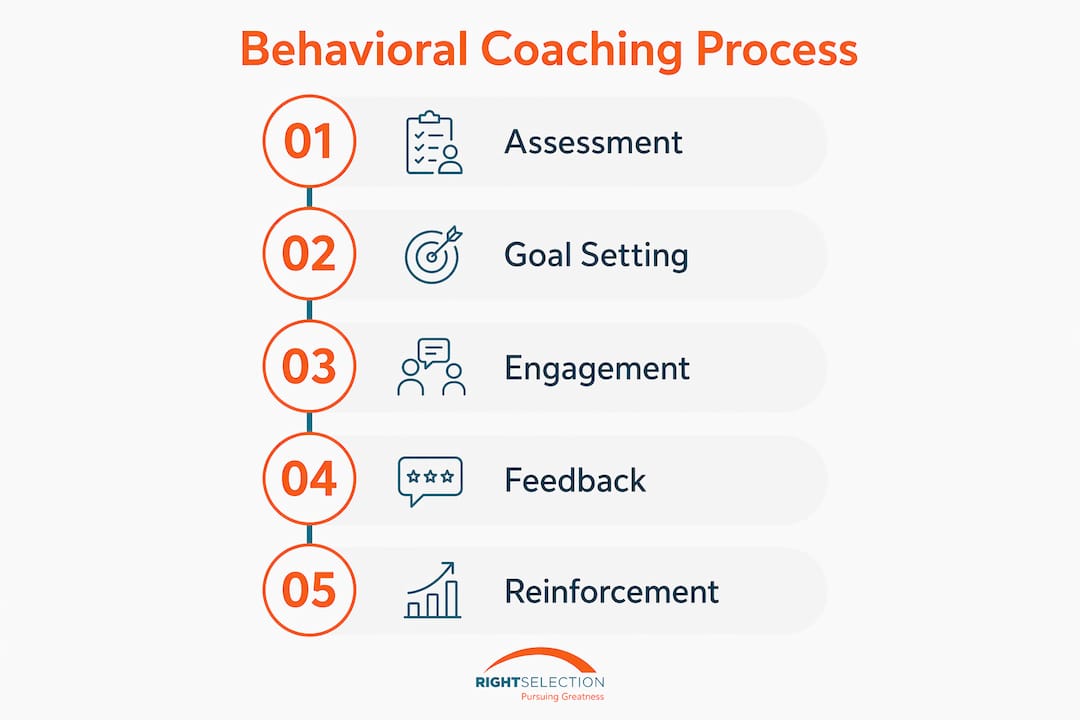
- Diagnostic phase: 360-degree feedback and behavioral assessments establish a baseline.
- Goal-setting phase: Coach and executive agree on specific, measurable behavioral targets.
- Active coaching phase: Bi-weekly sessions use questioning and reflection to shift thinking patterns.
- Accountability phase: Real leadership improvements occur between sessions, supported by agreed commitments.
- Review phase: Progress is measured against initial goals, with stakeholder input where appropriate.
Pro Tip: Ask your coach to share the 360-degree feedback report before your first session. Reviewing it alone first, without interpretation, often surfaces your most honest initial reactions, which become rich material for early coaching conversations.
What are the common misconceptions about executive behavioral coaching?
The biggest misconception executives carry into coaching is the expectation of direct advice. Effective behavioral coaching intentionally avoids giving answers to build the leader’s own problem-solving capacity. This creates initial friction. Executives who are used to decisive, fast-paced environments often find the reflective pace of coaching frustrating at first. That friction signals growth, not failure.
Several other misconceptions are worth naming directly:
- Coaching is not a remediation tool. The most effective coaching engagements happen with high-performing executives who want to grow, not leaders who have been flagged for performance issues.
- Coaching is not a quick fix. Behavioral change at the executive level takes months, not weeks. Expecting results after two or three sessions sets the engagement up to disappoint.
- The coach is not a mentor. A coach does not share their own career stories or tell you what they would do in your situation. That is mentoring, and it serves a different purpose.
- Feedback in executive environments is often distorted. Leadership environments feature filtered honesty, where direct reports and peers soften feedback to protect relationships. Coaching creates a rare space where unfiltered truth becomes possible.
Pro Tip: If you find yourself waiting for your coach to give you the answer, that is the moment to pause and ask yourself what you already know. The coach’s silence is an invitation, not a gap.
What makes behavioral coaching effective at the executive level?
Coach qualifications are the single most important variable in coaching effectiveness. Coaches with meaningful prior operating experience at or above the level they coach can read unspoken organizational dynamics that less experienced coaches miss entirely. An executive navigating a board conflict or a succession challenge needs a coach who has lived in that territory, not one who has only studied it.
Beyond qualifications, three structural factors determine whether a coaching engagement delivers results.
| Success factor | Why it matters |
|---|---|
| Confidentiality | Executives share real challenges only when they trust nothing leaves the room. |
| Clear goal-setting | Vague goals produce vague outcomes. Specific behavioral targets create measurable progress. |
| Accountability between sessions | Change happens in the real world, not during the coaching hour. Commitments between sessions embed new behaviors. |
| Stakeholder alignment | When the executive’s manager and HR partner understand the coaching goals, they can reinforce progress. |
| Coach’s operating experience | Coaches lacking executive experience often miss the unspoken politics that shape executive behavior. |
The relationship between coach and executive also requires genuine trust. An executive who feels judged or managed will not share the real challenges. The coaching space must feel safe enough for honest self-examination. That safety is not accidental. It is built through consistent confidentiality, non-judgmental questioning, and a coach who has credibility in the executive’s world.
Pro Tip: Before committing to a coaching engagement, ask the prospective coach directly: “What was the most senior role you held before becoming a coach?” The answer tells you more than any credential list. You can also explore leadership coaching frameworks to understand which models align with your development goals.
What are the real benefits of behavioral coaching for leaders?
The benefits of behavioral coaching for leaders are both individual and organizational. At the individual level, the most consistent outcome is increased self-awareness. Executives who complete a full engagement report a clearer understanding of how their behavior lands with others, which directly improves their communication and decision-making. Coaching uncovers blind spots that no performance review or 360-degree survey fully surfaces, because the coaching process creates the conditions for honest reflection over time.
The organizational benefits are equally concrete:
- Improved team performance: When an executive shifts a limiting behavior, such as dominating meetings or avoiding difficult conversations, the entire team dynamic changes.
- Stronger decision-making: Executives who understand their own cognitive patterns make fewer reactive decisions. Research on executive decision-making consistently links self-awareness to better judgment under pressure.
- Cultural impact: Leadership behavior sets the tone for organizational culture. A senior leader who models reflection, accountability, and openness creates permission for those behaviors to spread.
- Resilience in complexity: The 2026 leadership environment demands executives who can manage ambiguity without defaulting to control or avoidance. Behavioral coaching builds exactly that capacity.
The compound effect of these benefits is significant. One executive’s behavioral shift does not stay contained to their own performance. It shapes how their team operates, how decisions get made, and what behaviors the broader organization considers acceptable. That is why the importance of coaching for executives extends well beyond the individual engagement.
Executives who have worked with coaches trained in best practices for corporate leaders report that the most lasting changes come not from specific techniques but from the habit of honest self-examination that coaching instills. That habit, once built, continues to generate returns long after the formal engagement ends.
Key Takeaways
Behavioral coaching for executives is the most direct path to sustainable leadership change because it builds the executive’s own judgment rather than substituting external advice.
| Point | Details |
|---|---|
| Clear definition matters | Behavioral coaching targets present and future behavior change, not past psychology or technical skills. |
| Structured process drives results | Engagements run 6–12 months with sessions every 2–3 weeks, using diagnostics and accountability to embed change. |
| Coach experience is non-negotiable | Coaches with prior executive operating experience read unspoken dynamics that less experienced coaches miss. |
| Discomfort signals progress | Initial friction with the non-directive approach is a reliable indicator that real behavioral work is happening. |
| Organizational impact cascades | One executive’s behavioral shift improves team performance, decision quality, and organizational culture. |
Why readiness matters more than most executives expect
Executives often approach coaching as they approach most challenges: with a plan to solve it efficiently. That instinct works against them in a coaching engagement. The leaders who get the most from behavioral coaching are not the ones who arrive most prepared. They are the ones who arrive most open.
I have seen executives with impressive credentials and genuine commitment make little progress because they treated coaching as a performance to manage rather than a process to experience. The moment a leader starts optimizing their answers for the coach, the coaching stops working. The value lives in the unguarded moments, the reactions that surprise even the executive themselves.
The discomfort of behavioral change is not a side effect. It is the mechanism. When an executive feels genuinely challenged by a coaching question, that is the moment where new thinking becomes possible. Leaders who interpret that discomfort as a signal to push through, rather than a reason to disengage, are the ones who finish their engagements transformed rather than merely informed.
The most important thing I would tell any executive considering behavioral coaching is this: the process will not give you answers. It will give you better questions. Over time, those questions become the foundation of sharper judgment, stronger relationships, and leadership that holds up under real pressure. That is not a quick fix. It is a compound effect, and it is worth every uncomfortable session along the way.
— Dipti
How Right Selection connects executives with expert behavioral coaches
Right Selection has spent over 30 years curating an elite network of coaches, thought leaders, and corporate trainers who specialize in executive behavioral development. The coaches in Right Selection’s network bring real operating experience at the senior leadership level, which means they understand the unspoken dynamics that shape executive behavior.

For executives ready to move from insight to action, Right Selection designs personalized coaching engagements aligned to specific leadership goals and organizational contexts. Every engagement is matched with care and discernment, not assigned from a generic roster. Explore the Right Selection coaching network to find the coach whose experience and approach fit your leadership challenge. You can also review individual profiles, including Dhiren Harchandani, to assess fit before committing to an engagement.
FAQ
What is the definition of behavioral coaching for executives?
Behavioral coaching for executives is a structured, one-on-one process that helps senior leaders identify and modify specific thinking patterns and behaviors to improve leadership effectiveness. It focuses on present and future performance, not past psychology or technical skills.
How long does an executive behavioral coaching engagement last?
A typical engagement runs 6–12 months, with sessions every 2–3 weeks lasting 60–90 minutes. That duration gives behavioral change enough time to take root in the real leadership environment.
How is behavioral coaching different from mentoring or consulting?
Behavioral coaching does not offer advice or solutions. Mentoring shares experience-based guidance, and consulting delivers recommendations. Coaching builds the executive’s own judgment through structured self-reflection and accountability.
What qualifications should an executive coach have?
The most effective coaches hold prior operating experience at or above the leadership level they coach. That experience allows them to navigate unspoken organizational dynamics that coaches without executive backgrounds typically miss.
Can behavioral coaching improve organizational culture?
Yes. When an executive shifts a limiting behavior, the effects cascade through their team and shape broader organizational norms. Coaching one senior leader can change how an entire function communicates, decides, and performs.