

Executive coaching programs are defined as structured, one-on-one or small-group leadership development engagements that organizations use to attract top talent executive coaching programs and retain high-performing leaders. 87% of respondents report that executive coaching delivers a high return on investment, making it one of the most credible signals an organization can send to ambitious candidates. In 2026, top-tier executives are not simply evaluating salary. They are evaluating whether your organization is genuinely committed to their growth. A well-designed coaching program answers that question before the offer letter is signed.
How do executive coaching programs attract top talent?
Growth-focused organizations use executive coaching as a direct talent acquisition and retention lever, drawing in ambitious leaders who prioritize professional development over compensation alone. This is the core insight most HR teams miss. Coaching is not a perk. It is a recruitment signal.
Top executives are largely passive candidates. They are not browsing job boards. They respond to organizations that offer hyper-personalized package offerings that include coaching alongside equity and wellness benefits. When your talent acquisition strategy includes a named, structured coaching program, it communicates organizational seriousness in a way that a generic “growth culture” talking point never will.

Executive coaching uncovers leadership blind spots, improving performance and organizational impact well beyond problem-solving. That ongoing development partnership is exactly what high performers want to see before they commit to a new role. Organizations that lead with coaching in their employer brand consistently report stronger pipelines of senior candidates.
What are the main formats of executive coaching programs?
Executive coaching programs vary significantly in structure, duration, and investment. Understanding the options helps you choose the format that fits your organizational goals and budget.
Virtual programs offer flexibility for geographically distributed leadership teams. Sessions are typically conducted via video platforms, with coaches and executives meeting weekly or biweekly. This format suits organizations with remote or hybrid workforces.
In-person programs prioritize depth of relationship and are common in high-stakes leadership transitions. They often include immersive workshops, 360-degree feedback sessions, and direct observation of the executive in their work environment.
Fellowship-style programs are cohort-based and blend peer learning with individual coaching. The Foundations in Public Service Leadership Program is one example, with public-sector programs costing around $4,500 per participant.
Executive coaching programs typically last 5–11 months and require approximately 5 hours per week from participants. That time commitment is significant. Decision-makers must account for it when planning program rollouts alongside operational demands.
| Program Format | Duration | Time Commitment | Typical Cost |
|---|---|---|---|
| Virtual one-on-one | 3–6 months | 2–3 hours per week | $3,000–$15,000 |
| In-person intensive | 6–12 months | 4–6 hours per week | $10,000–$50,000+ |
| Fellowship cohort | 5–11 months | ~5 hours per week | ~$4,500 per participant |
| Hybrid blended | 6–9 months | 3–5 hours per week | $8,000–$25,000 |
Pro Tip: Request a sample session structure and participant schedule from any coaching provider before signing a contract. The time commitment on paper often looks manageable until it collides with a quarterly earnings cycle.
How does coaching support talent retention strategies?
Retention is where coaching programs deliver their most measurable compound effect. Leaders who receive structured coaching report higher job satisfaction, clearer career trajectories, and stronger alignment with organizational values. Each of those factors directly reduces voluntary turnover at the senior level.
Coaching is increasingly viewed as a vital leadership development tool that signals organizational commitment to high performers. That signal matters most during the first 18 months of a new executive’s tenure, when departure risk is highest. A coaching program that begins at onboarding communicates that the organization is invested in the individual’s success, not just their output.
Modern C-suite leaders value advanced executive coaching as a hyper-personalized compensation component alongside equity and wellness. This reframes coaching from a training line item to a strategic benefit. When you position coaching in your offer package with the same intentionality as stock options, it lands differently with senior candidates.
The top benefits of coaching for talent acquisition and retention include:
- Stronger employer brand: Candidates research your leadership development reputation before applying.
- Reduced onboarding risk: Coached executives reach full productivity faster and with fewer missteps.
- Higher promotion rates: Internal coaching pipelines reduce the cost and disruption of external hiring.
- Improved decision-making: Coaching sharpens leadership decision-making skills, reducing costly errors at the senior level.
- Cultural alignment: Coaches help new executives integrate into organizational culture without friction.
How to align coaching programs with your talent strategy
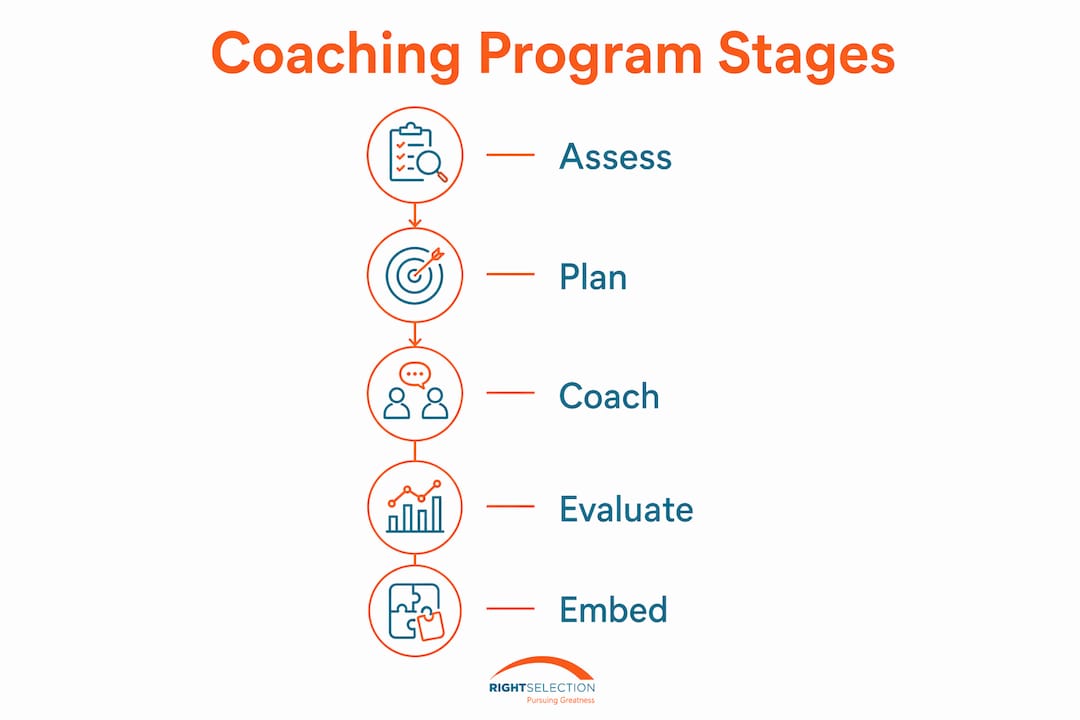
Integrating coaching into your talent acquisition and retention strategy requires deliberate sequencing. Follow these steps to build a program that delivers measurable results.
Identify your target population. Define which roles qualify for coaching. Limit initial eligibility to senior directors, VPs, and C-suite leaders to concentrate impact and manage cost.
Set coaching goals that mirror organizational priorities. If your talent strategy centers on succession planning, coaching goals should address leadership readiness and cross-functional influence. Misaligned goals produce misaligned outcomes.
Select coaches with proven business experience and cultural fit. Coaches should possess relevant business experience, proven methodologies, and cultural chemistry with your organization. A technically skilled coach who does not understand your industry context will lose credibility with senior executives quickly.
Integrate coaching into the compensation package. Present coaching as a named benefit in offer letters, not as an afterthought. Specify the program format, duration, and coach profile. This specificity signals commitment.
Build in measurement from day one. Effective coaching programs include goal-setting, progress tracking, and impact measurement for leadership development and retention. Define your success metrics before the first session, not after the program ends.
Review and iterate annually. Coaching needs evolve as your organization grows. Reassess program formats, coach rosters, and eligibility criteria each year to maintain relevance.
Pro Tip: Before committing to a coaching provider, arrange a chemistry session between the prospective coach and at least two of your current senior leaders. If the conversation does not generate genuine engagement within 30 minutes, the fit is wrong regardless of the coach’s credentials.
Understanding what executive coaching is at a foundational level helps HR teams make the case internally for program investment. That internal advocacy is often the hardest part of the process.
What are the most common pitfalls in executive coaching programs?
Even well-funded coaching programs fail when execution is careless. Misaligned coaches or lack of buy-in and clear goals lead directly to ineffective coaching and wasted resources. Knowing the pitfalls in advance is the most cost-effective form of program management.
Selecting coaches on reputation alone. A coach with an impressive client list is not automatically the right fit for your culture. Always prioritize cultural chemistry and industry relevance over brand name.
Skipping goal-setting. Coaching without defined objectives becomes expensive conversation. Every engagement must begin with written goals tied to specific leadership outcomes.
Underestimating executive time commitment. Senior leaders will deprioritize coaching when operational pressure spikes. Build protected time into the program structure from the start, with leadership sponsorship to reinforce it.
Failing to track progress. Organizations that do not measure coaching outcomes cannot defend the investment to boards or CFOs. Use structured check-ins, 360-degree feedback, and retention data to build the evidence base.
Treating coaching as remedial. Coaching positioned as a response to underperformance carries stigma. Position it as a leadership advantage available to your highest-potential executives, not a corrective measure.
Ignoring the role of coaching in career growth. Executives who see coaching as a career accelerator engage more deeply and produce better outcomes than those who view it as a compliance exercise.
Key Takeaways
Executive coaching programs are the most direct signal an organization can send to top leadership talent that it is genuinely committed to their growth and long-term success.
| Point | Details |
|---|---|
| Coaching drives talent attraction | Top executives evaluate leadership development commitments before accepting offers. |
| Program format matters | Choose virtual, in-person, or fellowship formats based on your workforce structure and budget. |
| Integrate coaching into compensation | Present coaching as a named benefit in offer letters to differentiate your talent package. |
| Measure outcomes from day one | Define retention and leadership performance metrics before the first coaching session begins. |
| Avoid common pitfalls | Misaligned coaches and missing goal-setting are the two most frequent causes of program failure. |
Why coaching is the talent strategy most organizations underuse
I have spent years working alongside organizations that invest heavily in recruiting but treat leadership development as an afterthought. The pattern is consistent. They spend six figures attracting a senior leader, then offer no structured support once that person is through the door. Within 18 months, the executive is gone, and the cycle repeats.
What I find most striking is how rarely coaching appears in the initial offer conversation. Organizations that do include it, by name, with specifics, report a noticeably different quality of candidate engagement. The conversation shifts from negotiation to partnership. That shift is not incidental. It reflects what ambitious leaders actually want, which is evidence that the organization will invest in them the way they intend to invest in the organization.
The compound effect of consistent coaching is also underestimated. One coaching engagement does not transform a leader. A culture of coaching, sustained across multiple cohorts and leadership levels, shapes perspective over time and builds an internal talent pipeline that reduces dependence on external hiring. That is the real competitive edge in 2026’s talent market. It is not the individual program. It is the organizational commitment that the program represents.
Organizations that treat coaching as a line item to be cut in a downturn will always be outcompeted for senior talent by those that treat it as a core leadership investment. The data supports this. The experience confirms it.
— Dipti
How Right Selection can support your executive coaching strategy
Right Selection connects organizations with an elite network of global coaches, thought leaders, and corporate trainers who specialize in executive leadership development. With over 30 years of experience and a roster of 100+ speakers and coaches, Right Selection designs tailored coaching programs that align with your specific talent acquisition and retention goals.
Whether you are building a coaching program from the ground up or refining an existing one, Right Selection’s approach centers on curating the right coach for your culture, not just your industry. Every engagement is designed to produce measurable leadership outcomes. Explore Right Selection’s coaching solutions to find the program structure and coach profile that fits your organization’s leadership strategy. You can also browse the full speaker and coach roster to identify the right development partner for your senior leadership team.
FAQ
What makes executive coaching effective for talent attraction?
Executive coaching signals organizational commitment to leadership growth, which top-tier candidates actively evaluate before accepting offers. Growth-focused organizations that include coaching in their employer brand consistently attract more ambitious, high-performing leaders.
How long do executive coaching programs typically last?
Most executive coaching programs run for 5–11 months and require approximately 5 hours per week from participants. Program length varies based on format, goals, and whether the engagement is individual or cohort-based.
How do you measure the ROI of executive coaching?
Track retention rates, promotion timelines, 360-degree feedback scores, and leadership performance metrics before and after coaching engagements. Surveys show 87% of organizations report high ROI from executive coaching when outcomes are measured systematically.
Should coaching be offered to all executives or only high-potential leaders?
Start with senior directors, VPs, and C-suite leaders to concentrate impact and build a measurable evidence base. Expand eligibility to high-potential mid-level leaders once the program structure is proven and funded.
How do you choose the right executive coach for your organization?
Prioritize coaches with relevant business experience, a proven methodology, and demonstrated cultural fit with your organization. Always conduct a chemistry session between the prospective coach and current senior leaders before signing any agreement.