
An industry-specific executive coach is defined as a professional with deep sector knowledge, verified leadership impact, and the operational fluency to address the real pressures leaders face inside a specific industry. Choosing to select an industry-specific executive coach is one of the highest-leverage decisions a corporate leader or HR professional can make. Generic coaching credentials alone do not guarantee relevant outcomes. The right coach understands your regulatory environment, your board dynamics, and the unspoken language of your sector before the first session ends.
What qualifications define an effective industry-specific executive coach?
Credentials matter, but they are not the whole story. The executive coaching field is largely unregulated, which means a certification from a recognized body like the International Coaching Federation (ICF) signals commitment to craft, not sector mastery. HR professionals must look beyond the certificate and into the coach’s actual track record within the target industry.
The most reliable indicator of sector depth is accumulated coaching hours with industry cohorts. Specialized executive coaches typically bring 5,000 or more hours of experience working with leaders in specific sectors such as life sciences, financial services, or manufacturing. That volume of sector-focused work builds the kind of nuanced understanding that no certification program can replicate.
When evaluating credentials, prioritize these factors:
- Verified client outcomes. Ask for third-party evidence of measurable improvements, such as revenue growth, leadership scalability, or operational efficiency gains. Testimonials alone are insufficient.
- Regulatory and board-level familiarity. A coach who has worked inside your sector understands compliance pressures, fiduciary responsibilities, and governance dynamics firsthand.
- Operational background. Coaches who have held leadership roles in your industry diagnose challenges faster and earn trust more quickly with senior executives.
- ICF or equivalent certification. Treat this as a baseline filter, not a selection criterion. It confirms professional standards, not industry expertise.
Pro Tip: Ask every candidate coach to describe a specific leadership challenge they solved for a client in your sector. Vague answers signal a generalist. Specific, outcome-driven answers signal a specialist.
How do you evaluate coach-fit through initial consultations?
The chemistry call is the single most reliable evaluation tool available to HR professionals. Chemistry meetings typically last 30 to 90 minutes and serve as a live test of the coach’s strategic insight, communication style, and cultural fit with your organization. Treat this meeting as a working session, not a sales call.
To get the most from an initial consultation, follow this sequence:
- Bring a real, current business challenge. Do not present a hypothetical. A coach who can engage meaningfully with an actual problem you are facing right now demonstrates immediate relevance.
- Assess the quality of their questions. Strong industry-specific coaches ask questions that reveal they understand your sector’s pressure points. Weak coaches ask generic questions about goals and values.
- Test their operational vocabulary. Listen for sector-specific language. A coach fluent in your industry will naturally reference relevant metrics, regulatory frameworks, or market dynamics without prompting.
- Evaluate communication style fit. A coach whose style clashes with your leadership culture will struggle to build the trust required for meaningful work at the executive level.
- Ask about their process for measuring progress. Coaches with a results-driven approach will describe specific milestones and review cycles tied to organizational goals.
Pro Tip: HR professionals should attend the chemistry call alongside the executive being coached. You can observe the dynamic objectively and assess cultural alignment in ways the executive, who is emotionally invested, may miss.
Understanding the different types of executive coaching programs available before the chemistry call helps you ask sharper questions and evaluate fit more accurately.
What are the benefits of hiring consultant-coaches with industry backgrounds?
The most effective coaches at the senior leadership level combine coaching skills with genuine operational experience. Top industry-specific coaches act as consultant-coaches, fluent in the sector-specific language that builds instant trust with C-suite leaders. This dual capability accelerates the entire coaching relationship.
Consider the difference in practice. A coach with a manufacturing background understands shop-floor metrics, throughput constraints, and the tension between production targets and safety compliance. A coach with a financial services background reads the pressure of fiduciary duty, regulatory scrutiny, and shareholder expectations without needing it explained. That operational fluency means less time orienting the coach and more time solving real problems.
“Hiring generalist coaches in specialized industries often leads to mismatched frameworks and less impactful outcomes. Coaches with engineering or operations backgrounds outperform generalists who impose common frameworks that neglect field realities.”
The consultant-coach model also changes the nature of the coaching conversation. Rather than facilitating reflection through open-ended questions alone, a consultant-coach can offer informed perspective on industry-specific decisions. This is particularly valuable in construction, healthcare, and financial services, where the stakes of leadership decisions are high and the margin for error is narrow.
Avoiding the generalist trap is one of the most important reasons to find a specialized executive coach rather than defaulting to a well-credentialed but sector-agnostic practitioner. The role of executive coaches in high-stakes decisions is most powerful when the coach already understands the context those decisions live in.
Step-by-step process for selecting the right coach
A structured selection process protects your organization from costly mismatches. The best industry-specific coaching engagements begin with clear criteria established before the first candidate is contacted.

Step 1: Define the leadership challenge. Identify whether the need is navigating a merger, scaling a leadership team, managing a regulatory crisis, or developing a successor. The challenge type determines the sector experience required.
Step 2: Build a candidate shortlist using industry fit as the primary filter. Credentials and reputation come second. A coach with 20 years in healthcare and a strong ICF credential is a stronger candidate for a hospital system than a globally recognized generalist coach.
Step 3: Review third-party evidence of client outcomes. Request case studies, not just references. Look for documented improvements in revenue growth, operational efficiency, or leadership scalability.
Step 4: Conduct structured chemistry calls. Use the consultation framework described earlier. Score each candidate on sector fluency, communication style, and quality of insight.
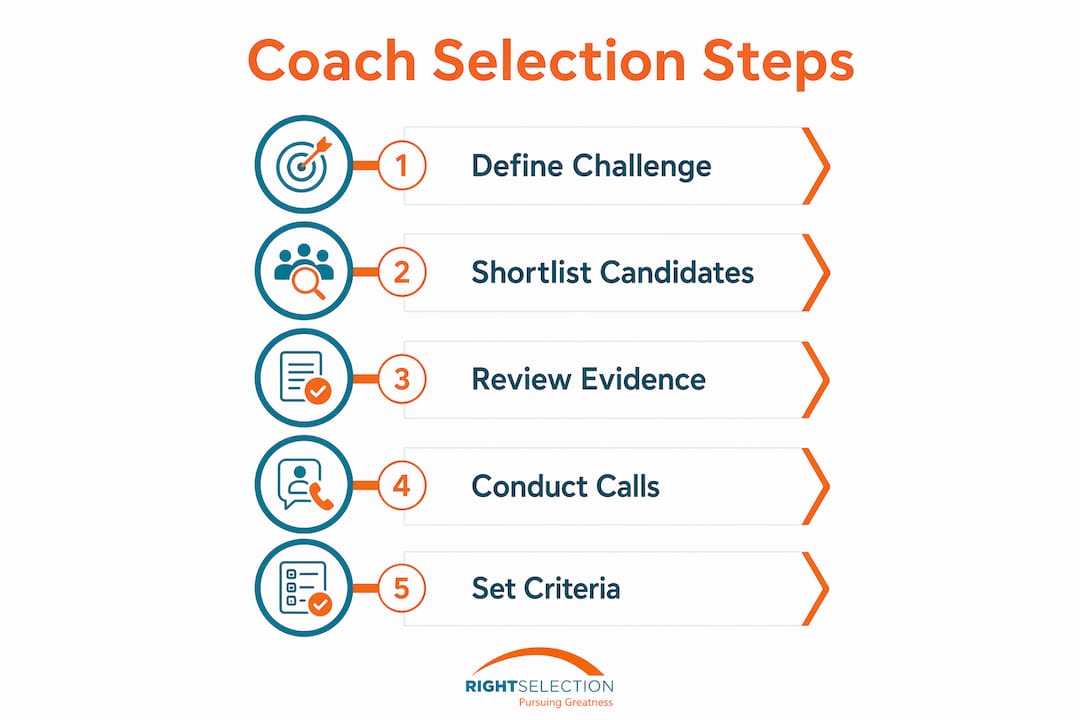
Step 5: Align on measurement criteria before signing. Agree on how coaching impact will be tracked, reviewed, and reported to HR and leadership stakeholders.
The most common mistake organizations make is overweighting credentials and underweighting outcome evidence. A coach with a strong certification but no verifiable sector results is a risk, not an asset. The coaching ROI conversation should begin at the selection stage, not after the engagement ends.
| Selection criterion | Why it matters |
|---|---|
| Industry cohort hours (5,000+) | Confirms depth of sector-specific coaching experience |
| Third-party outcome evidence | Validates real impact beyond self-reported success |
| Chemistry call performance | Tests immediate relevance and communication fit |
| Operational background in sector | Accelerates trust and diagnosis at the executive level |
| Agreed measurement framework | Ensures accountability and ROI tracking from day one |
Pro Tip: Build a simple scoring rubric before chemistry calls. Rate each candidate on sector fluency, insight quality, and communication fit on a 1–5 scale. This removes bias and makes the final decision defensible to senior stakeholders.
How do you measure the impact of executive coaching?
Coaching impact is measurable when the right metrics are defined at the start. Executive coaching ROI is maximized when leadership improvements are tracked against organizational goals and verified through third-party outcomes rather than self-assessment. That distinction matters because self-reported progress is easy to inflate.
The most credible metrics for measuring coaching effectiveness in a specific industry context include:
- Revenue growth or pipeline expansion tied to leadership decisions made during the coaching period.
- Operational efficiency gains documented through team performance data, not executive perception.
- Leadership scalability indicators, such as the number of direct reports promoted or the reduction in leadership attrition.
- Decision quality under pressure, assessed through structured 360-degree feedback from peers and direct reports.
- Alignment with organizational development cycles, reviewed quarterly alongside HR performance frameworks.
Coaching that cannot be measured should not be renewed. Aligning review cycles with your organization’s existing HR and leadership development calendar makes the evaluation process practical rather than burdensome. The compound effect of well-measured coaching builds a track record that justifies continued investment and informs future coach selection decisions.
Key Takeaways
Selecting an industry-specific executive coach requires prioritizing sector expertise, verified outcomes, and chemistry fit over credentials alone.
| Point | Details |
|---|---|
| Sector expertise over credentials | Coaches with 5,000+ hours in your industry outperform certified generalists in relevance and impact. |
| Chemistry calls are decisive | Use 30–90-minute consultations with real business challenges to test insight and communication fit. |
| Consultant-coach model wins | Coaches with operational backgrounds diagnose faster and build trust more quickly at the C-suite level. |
| Measure from day one | Agree on revenue, efficiency, and scalability metrics before the engagement begins. |
| Third-party evidence required | Case studies and documented outcomes matter more than testimonials in an unregulated field. |
Why the chemistry call is the real selection decision
By Dipti
After years of working in leadership development and watching organizations invest in coaching engagements that underdelivered, I have come to one firm conclusion. The chemistry call is not a formality. It is the actual selection decision.
I have seen HR teams spend weeks reviewing credentials, comparing certifications, and debating coaching philosophies, only to make the final call based on a 45-minute conversation. That instinct is correct. What you observe in that first meeting, how the coach listens, what questions they ask, whether they immediately grasp the texture of your industry, tells you more than any resume ever will.
The part that most articles miss is what C-suite coaching actually is at the senior level. It is not skill-building. It is helping a leader navigate complexity, isolation, and decisions that have no clean answers. The best coaches I have encountered create a confidential thinking space where a CEO or CFO can be genuinely uncertain without consequence. That kind of trust only forms when the coach already speaks the language of the industry.
My advice to HR professionals is this: deepen your vetting rigor at the chemistry stage. Bring a real problem. Watch how the coach handles ambiguity. A coach who reaches for a generic framework when faced with a sector-specific challenge is showing you exactly who they are. Believe them.
The difference between a good coaching engagement and a transformative one almost always traces back to that first conversation.
— Dipti
Right Selection connects you with coaches who know your industry
Finding the right executive coach for your sector should not feel like a guessing game. Right Selection has spent over 30 years curating an elite network of coaches, thought leaders, and corporate trainers who bring genuine industry fluency alongside proven coaching credentials.
Right Selection’s matching process focuses on measurable outcomes and sector-specific fit, not just availability and certification. Every coach in the network has a documented track record of leadership impact within specific industries, from financial services to healthcare to manufacturing. When you work with Right Selection, you gain access to a curated roster of 100+ specialists and a session design process built around your organization’s actual goals, not a generic program template.
FAQ
What makes an executive coach industry-specific?
An industry-specific executive coach has deep operational knowledge of a particular sector, typically demonstrated through 5,000 or more hours coaching leaders within that industry. This expertise goes beyond certification to include familiarity with sector regulations, board dynamics, and leadership pressures unique to that field.
How long does a typical chemistry call last?
Chemistry calls typically last between 30 and 90 minutes. The most effective sessions involve bringing a real, current business challenge to test the coach’s strategic insight and sector fluency directly.
Why is the coaching industry considered unregulated?
The executive coaching field lacks a single governing body that mandates licensing or enforces standards. This means HR professionals must verify coaching impact through third-party evidence and documented client outcomes rather than relying on certification alone.
What metrics should I use to measure coaching ROI?
The strongest metrics include revenue growth tied to leadership decisions, operational efficiency gains documented through team data, leadership scalability indicators, and 360-degree feedback scores. Agree on these metrics before the engagement begins.
How does a consultant-coach differ from a generalist coach?
A consultant-coach combines coaching skills with direct operational experience in a specific industry. This background allows them to diagnose leadership challenges faster and offer informed perspective, rather than relying solely on open-ended facilitation techniques that may miss sector-specific realities.